@alexeiled/pi-plan-exec
Turn a Markdown execution plan into an isolated, resumable Pi run - durable controller state, one writer, deliberate recovery
Package details
Install @alexeiled/pi-plan-exec from npm and Pi will load the resources declared by the package manifest.
$ pi install npm:@alexeiled/pi-plan-exec- Package
@alexeiled/pi-plan-exec- Version
1.4.0- Published
- Sep 10, 2026
- Downloads
- 1,511/mo · 428/wk
- Author
- alexeiled
- License
- MIT
- Types
- extension, skill
- Size
- 367 KB
- Dependencies
- 0 dependencies · 7 peers
Pi manifest JSON
{
  "extensions": [
    "./src/index.ts"
  ],
  "skills": [
    "./skills"
  ],
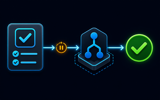
  "image": "https://raw.githubusercontent.com/alexei-led/pi-plan-exec/main/assets/plan-exec-card.png"
}
Security note
Pi packages can execute code and influence agent behavior. Review the source before installing third-party packages.
README
pi-plan-exec





Turn a Markdown execution plan into an isolated, resumable Pi run.
pi-plan-exec solves the control problem of long-running AI implementation.
A capable agent can lose context, repeat work, skip verification, or start a
second writer after a restart. This extension moves task order, retry limits,
worktree checks, and recovery out of prompt prose into durable controller state.
It has been exercised in runs lasting a few hours; the controller keeps polling
instead of asking one chat prompt to remember the whole job.
It executes one checked-list task at a time in a Git checkout you choose, then runs review and fix stages with fresh Pi subagents and optional Fusion. A worker saying “done” is not enough: the plan’s checked items are the implementation record.
Experimental. Start with disposable repositories or reviewable worktrees.
What it does
- Keeps one writer in one checkout.
/execcan create an isolated Git worktree, work in place, or use an explicitly selected existing worktree. Existing-worktree runs keep that worktree and branch, and move the interactive Pi session there. - Executes plans deterministically. It selects the first incomplete task, starts a fresh worker, and verifies completion from the plan checkboxes.
- Recovers deliberately. A reload reattaches a matching run owned by the
returning session.
/exec resumetakes over a run whose owning session is proven dead, and resets a run whose worker is provably gone before continuing it. Compare-and-set records, operation IDs, controller locks, and leases avoid intentionally starting another writer or losing a pause or cancellation. - Reviews before it finishes. It runs comprehensive, smells, Fusion, and
critical review/fix phases. Fusion
>=0.7.0validates the strictplan-review-v1output contract; plan-exec consumes only top-levelcallerOutput.outputand fails closed when validation evidence is absent. If Fusion is unavailable, the Fusion review stage falls back to the pi-subagents reviewer without changing the persisted operation ID. Unresolved findings remain visible in the finalcompleted_with_findingsstate.
Install and run
Install the required packages, then plan-exec. Fusion is optional; install it for the preferred Fusion review provider:
pi install npm:pi-subagents
pi install npm:@tintinweb/pi-tasks
pi install npm:@alexeiled/pi-subagents-bridge
pi install npm:@alexeiled/pi-fusion
pi install npm:@alexeiled/pi-plan-exec
The providers remain independent Pi packages. Install the latest Bridge release. pi-plan-exec uses v2 durable lookup and terminal proof when advertised; v1 remains compatible but fails closed when recovery cannot prove a launch outcome.
Fusion is optional: the controller falls back to the pi-subagents reviewer when
Fusion is absent or its launch response is unusable.
Reload Pi. From an interactive session in a Git repository, prepare a short goal or run an existing executable plan:
/reload
/goal Add a greeting endpoint
/exec docs/plans/20260713-add-greeting.md
/exec --worktree ../project-feature docs/plans/20260713-add-greeting.md
/goal <short goal> uses the current Pi session for read-only repository
exploration (with an enforced maximum of 12 read tool calls), then permits
only the extension-owned finalize_goal_plan tool to
publish a researched Markdown plan under docs/plans/. The finalizer validates
the executable-plan parser contract, repository evidence, exact goal binding,
and stable goal_id, goal_hash, plan_hash, and document_hash metadata.
It atomically creates a complete file without overwriting an existing one. It
never creates a run, worktree, task projection, or child. A ready retry reuses
an unchanged validated file; an edited or incomplete file is refused. A turn
that ends before finalization is reported as interrupted and publishes no plan.
The ready result has exactly one next action: /exec <path>.
While an execution runs, Pi shows the execution-worktree path, branch, stage, and worker. Four verbs cover everything after the start:
/exec statusnever interrupts or restarts a run. It may idempotently repair the advisory pi-tasks and Fleet visibility caches fromrun.json. With no run ID it lists every run, groups the ones that claim a worker by the evidence for that claim, reports any missing package with its install command, and ends every row in one next command. Add a full run ID for one run in detail, or--allto include terminal runs older than a day./exec resumecontinues or recovers anything stuck. It takes the lease over from a session proven dead, resets a run whose worker is provably gone and then continues it, and asks before retrying a task blocked outside the run or rebinding the execution branch after external work moved the worktree. It never launches on partial evidence: a run whose worker cannot be proven gone is reported, not reset. A model or provider failure is retried with the model this Pi session is signed in to and does not consume an implementation retry;--model currentor--model provider/modelis an advanced override for that one replacement child and never pins later workers. When a child pauses for a supervisor reply, the live controller preserves and polls that workflow, then continues automatically after the reply. After a restart, resume consumes its durable result or reattaches the same operation; it does not launch a duplicate. Missing bridge memory, a missing async directory, and v1 absence are inconclusive; only matching v2 durable absence or native process-terminal proof permits recovery to launch again./exec stopasks whether to pause the run (resumable) or cancel it (final, worktree preserved)./exec cleanupretires run records. It previews by default and deletes nothing;--applyremoves the registry entry — never the worktree, branch, or progress file — for terminal runs that finished more than 7 days ago.failedruns are excluded, because their record is what/exec resumeneeds.
Implementation checkboxes remain sequential and cannot be force-skipped. When a
provider operation may still exist, plan-exec keeps its recorded operation ID and
reconciles it before any retry. If a review, finalization, or statistics stage
cannot recover, /exec skip <full-run-id> --reason <text> stops the tracked
child before recording an explicit waiver and advancing. It never skips
implementation or archival, and the run finishes as completed_with_findings.
The installed exec-plan skill is also available as /skill:exec-plan for the
plan format, the recovery rules, and the retired names and flags a scripted agent
uses instead of a prompt.
The Guide defines the accepted
heading-based formats and checkbox rules. Omit the path to select an eligible
Markdown plan below docs/plans/.
Runtime model
flowchart LR
    plan["Markdown plan"] --> controller["durable controller"]
    controller --> bridge["pi-subagents-bridge"]
    bridge --> worker["fresh worker / reviewer"]
    worker --> worktree["Git worktree"]
    worktree --> checks["plan checkboxes"]
    checks --> controller
    controller --> fusion["optional pi-fusion panel + judge"]
    fusion -. unavailable .-> bridge
    fusion --> controller
    controller --> result["completed or completed_with_findings"]
pi-plan-exec owns plan-specific control flow. Existing Pi packages retain
ownership of subagent execution, task UI, and multi-model review.
Read next
- Guide — requirements, executable-plan format, commands, lifecycle, recovery, and safety limits.
- Architecture — component ownership, state, RPC contracts, stages, and trust boundaries.
- Development — local verification and release process.
- Changelog — release history and compatibility changes.
- Original design record — design decisions and intended behavior.