@evolvehq/docflow
ADR-driven documentation workflow: scaffold an Architecture Decision Record (ADR) catalogue, a plan/ queue, and AGENTS.md conventions into any repo, then author, queue, ship, audit, and roll up ADRs with lifecycle skills — across one repo or a multi-repo
Package details
Install @evolvehq/docflow from npm and Pi will load the resources declared by the package manifest.
$ pi install npm:@evolvehq/docflow- Package
@evolvehq/docflow- Version
0.9.4- Published
- Jul 3, 2026
- Downloads
- 848/mo · 29/wk
- Author
- eugenio.minardi
- License
- MIT
- Types
- skill
- Size
- 1.6 MB
- Dependencies
- 0 dependencies · 0 peers
Pi manifest JSON
{
  "skills": [
    "./plugins/docflow/skills"
  ],
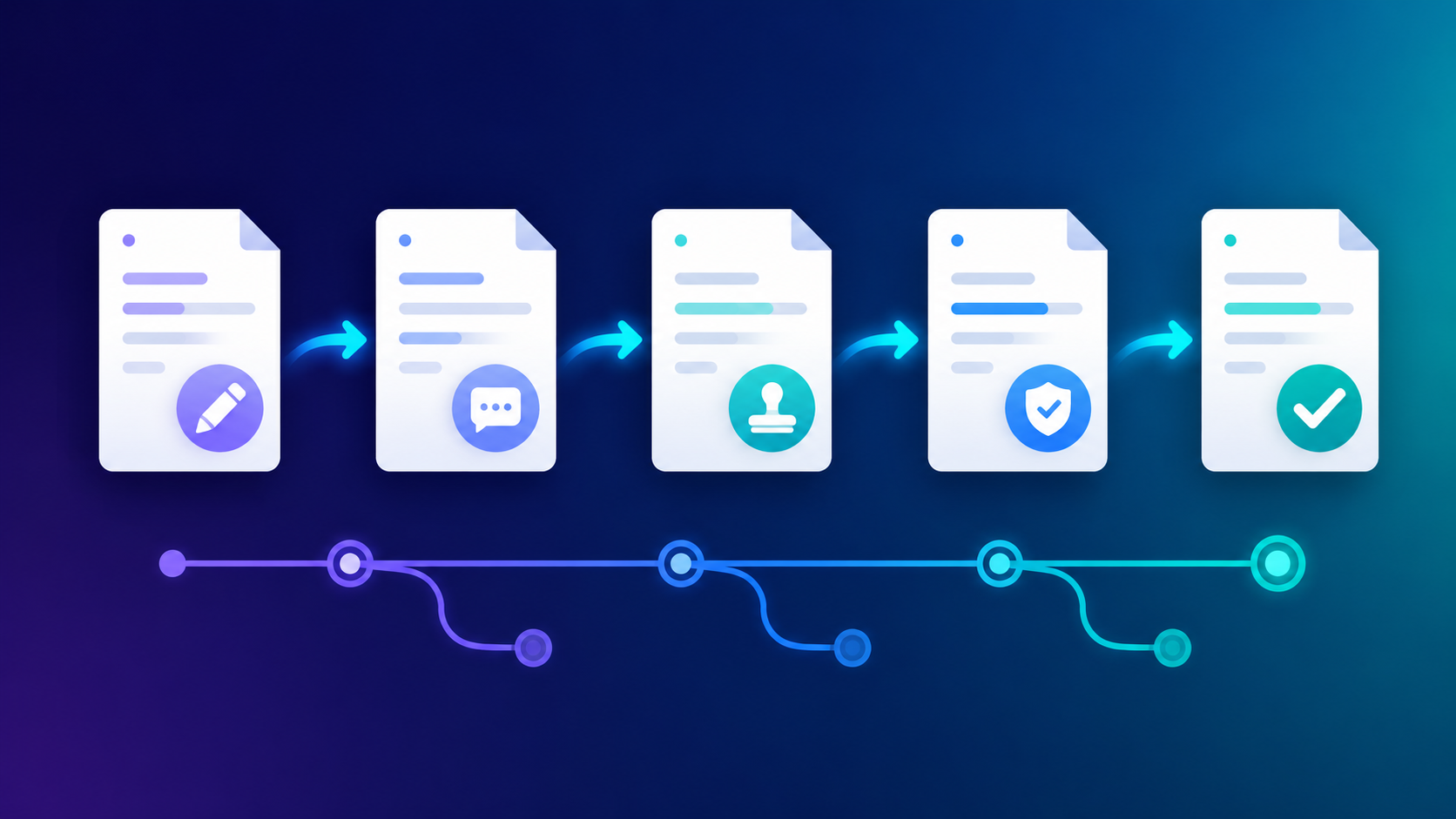
  "image": "https://raw.githubusercontent.com/EvolveHQ/docflow/main/docs/preview.png"
}
Security note
Pi packages can execute code and influence agent behavior. Review the source before installing third-party packages.
README
docflow
A plugin for ADR-driven, documentation-led projects, working on
Claude Code, Claude Cowork, pi, Codex, and OpenCode from the same
skill files (see Install).
It installs a bootstrap skill that scaffolds (or retrofits) an
Architecture Decision Record (ADR) catalogue, a plan queue, and
AGENTS.md conventions into any repository, plus a set of lifecycle
skills that author, queue, ship, and audit ADRs — so the project can
be driven by both humans and coding agents from a small set of canonical
files. For the formal definition of the conventions — why they help and
where they fall short — see the
methodology.
Skills
Slash commands below are the Claude Code form. On the pi coding
agent the same skills are invoked as /skill:<name> (e.g.
/skill:bootstrap, /skill:new-adr). See Install.
| Skill | Slash command | Purpose |
|---|---|---|
| bootstrap | /bootstrap |
Scaffold or retrofit the whole convention set. Start here. |
| new-adr | /new-adr |
Author one ADR — next contiguous number, right shape, INDEX + domain wiring, supersede linkage. |
| new-plan | /new-plan |
Add a plan/todo item tracing to its owning ADR(s). |
| ship-item | /ship-item |
Run the completion event: verify → integrate → todo→done → ADR Accepted→Implemented → INDEX/WORKLOG. |
| add-convention | /add-convention |
Assess whether a convention is worth codifying, route it to the right home (or to an ADR), then add it. Use it to enable optional practices (e.g. TDD) on demand — see USAGE §5a. |
| audit | /audit |
Lint the repo against its own conventions — numbering, INDEX sync, plan coverage, ADR-privacy leaks, more. |
| brainstorm | /brainstorm |
Decompose a problem into candidate ADRs + plan items (proposes drafts; writes nothing until approved). |
| agent-wave | /agent-wave |
Orchestrate a wave of parallel worktree subagents over the queue, with checkpoint or continuous supervision. |
| rollup | /rollup |
For a multi-repo product: aggregate every member repo's ADRs into one derived, product-wide roll-up (run from the home repo). |
The lifecycle skills all read CONVENTIONS.md first and honour the
choices the bootstrap recorded (ADR shape, status lifecycle, integration
model, multi-agent mode). They refuse to run on an un-bootstrapped repo
and point you at /bootstrap.
What /bootstrap installs
Only the core is always written; everything else is an opt-in layer chosen during the assessment, so a minimal repo stays as light as a classic ADR catalogue.
Core (always):
AGENTS.md— hard rules for coding agents (the entry point).CLAUDE.md— one-liner re-exportingAGENTS.mdso Claude Code picks it up automatically.CONVENTIONS.md— authoring rules for ADRs, naming, status lifecycle, audit trail, and git contract.INDEX.md— generated table of all ADRs.adr/0000-template.md— the ADR template; the catalogue starts here.
Optional layers (opt-in):
plan/todo/+plan/done/— the implementation queue (Q4a).git mvfromtodo/todone/is the completion event._agent/— coordination (ROLES,LOCKS,WORKLOG,CURRENT_FOCUS,HANDOFF, optionalprompts/). Q5 — choose None to omit it.domains/<slug>/README.md— grouping: per-area indexes (e.g.domains/auth/) over the flat catalogue, for navigating a large catalogue by area. Organisational only — ADRs keep their number;new-adrfiles each under its domain. Enable it when the project has distinct areas (Q7).GLOSSARY.md, the technology-ADR template, and project-specific hard rules (vendor-naming, regulated evidence, language mandate, audit-stream separation) — Q7/Q10.
Omitting any optional layer leaves a valid repo; a lifecycle skill that needs an absent layer refuses cleanly and says what's missing.
Enable a deferred layer later: re-run bootstrap on the repo — it
detects your existing setup, skips the settled questions, and offers only
the optional layers you don't have yet, adding the chosen ones by merge.
(Two shortcuts: add-convention creates GLOSSARY.md on your first shared
term, and new-adr offers to create a domains/<slug>/ grouping when you
file an ADR under a new domain.)
Placement: AGENTS.md and CLAUDE.md always stay at the repository
root; everything else lives under a configurable artefact root —
.docflow/ (the default), docs/, or the repo root — chosen at bootstrap
and recorded in CONVENTIONS.md. Discovery is deterministic for tools
(the same pattern as git's .git): a .docflow/ directory is the
root; any other choice gets a one-line .docflow pointer file at the
repo root (root: docs/), written by bootstrap.
Seed ADR: by default, bootstrap also writes adr/0001 — a first
ADR recording the decision to adopt this method (self-documenting, like the
classic "use ADRs" convention). It references CONVENTIONS.md for the rules
and is created Implemented. Decline it at sign-off if you want only the
template.
Why
Documentation-led projects rot when conventions live in someone's head. This plugin makes the conventions explicit, machine-readable, and applied uniformly — so a fresh contributor (human or agent) can pick up the repo with no oral handover.
It works equally well on fresh repos (scaffolds from zero) and on existing repos (retrofits, preserving and merging existing files rather than overwriting them).
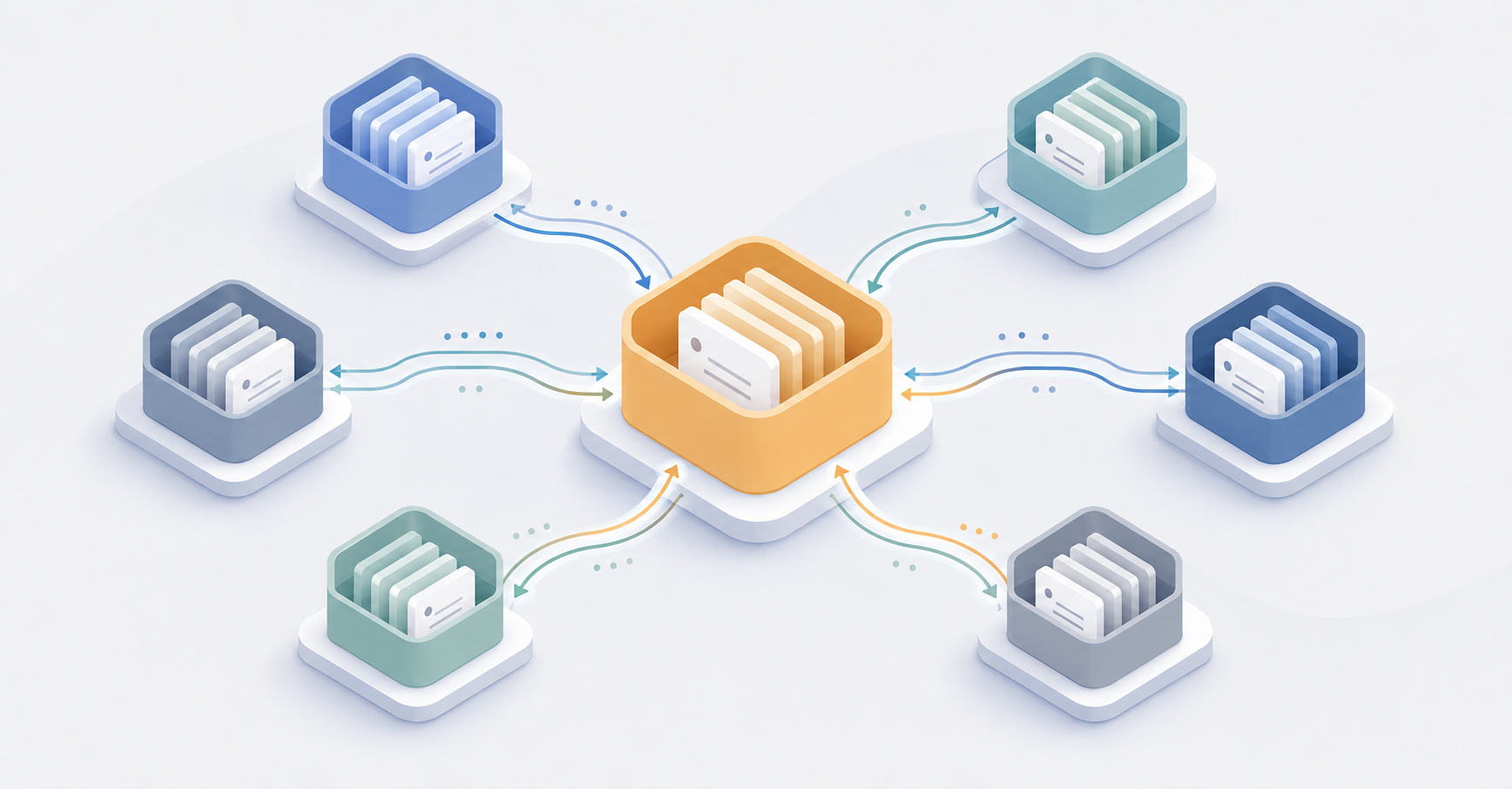
Multi-repo products
A single product spread across several repositories can run as a
federation. At bootstrap a repo declares whether it is standalone or
part of a multi-repo product, and whether it is establishing a new
federation or joining one — a joining repo only ever writes its own
back-pointer, never into another repo. You pick a topology (central
decisions repo · distributed · home-repo-plus-local), and the convention
set keeps numbering contiguous per repo while a federation-wide
identity is the cross-repo key. The rollup skill aggregates every
member's catalogue into one product-wide view, and audit gains
cross-repo checks (membership, identity collisions, dangling references,
roll-up drift, convention drift). Work and status cross repos the same way:
a cross-repo decision is one plan item per affected repo, and its aggregate
status ("2 of 3 repos") surfaces in the roll-up. No tool writes across a
repo boundary; consistency is declared at the edges and enforced by audit. See the
methodology
for the full model.
No drafts in the catalogue
docflow records outcomes, not work-in-progress. There is no Draft
status and no brainstorming/ folder — an ADR's first persisted
status is Proposed, created only once a decision is approved. The
brainstorm skill explores candidates in conversation and writes
nothing until you approve them; only then does new-adr mint a numbered
ADR. This keeps the catalogue free of half-formed drafts and the numbering
clean — numbers go only to real decisions — following the lightweight-ADR
tradition that an ADR captures the agreed decision, not the discussion that
produced it.
Install
docflow ships from one skill source (plugins/docflow/skills/) to
five coding agents — only the packaging differs. Two surfaces: the scaffolded output
(AGENTS.md, the ADR catalogue, plan/, _agent/) is plain Markdown
read natively by any agent that loads AGENTS.md; the skills are
SKILL.md files the host discovers.
| Agent | Output | Skills | Install | Invoke |
|---|---|---|---|---|
| Claude Code | native | ✅ | marketplace (below) | /bootstrap |
| Claude Cowork | native | ✅ | same Claude Code plugin | /bootstrap |
| pi | native | ✅ | pi install npm:@evolvehq/docflow |
/skill:bootstrap |
| Codex | native | ✅ | codex plugin marketplace add EvolveHQ/docflow |
$bootstrap / /skills |
| OpenCode | native | ✅ | auto-discovered, or symlink into ~/.config/opencode/skills |
auto, by description |
Handy: OpenCode also reads ~/.claude/skills/ and ~/.agents/skills/, so
a shared skills directory can serve it alongside another agent.
Claude Code — from this marketplace
/plugin marketplace add EvolveHQ/docflow
/plugin install docflow@evolvehq
Invoke with /bootstrap, /new-adr, /ship-item, … (auto-triggers on
matching requests too).
Claude Cowork
Cowork uses the same plugin system as Claude Code, so install the
docflow plugin exactly as above (/plugin marketplace add EvolveHQ/docflow, then install) — or from Anthropic's community
marketplace once listed. No separate packaging.
pi coding agent
pi install npm:@evolvehq/docflow
or, from source, pi install git:github.com/EvolveHQ/docflow. Pi
auto-discovers the skills via the pi.skills key in
package.json. Invoke with /skill:bootstrap, /skill:new-adr,
/skill:ship-item, … Pi does not auto-trigger skills from their
descriptions the way Claude Code does — invoke them explicitly (the
agent will also load a skill on-demand when a task clearly matches).
The scaffolded output (AGENTS.md, CONVENTIONS.md, the ADR catalogue,
plan/, _agent/) is plain Markdown and is read natively by pi's
hierarchical AGENTS.md loading — no porting needed.
Codex (OpenAI)
docflow ships a Codex plugin (.codex-plugin/), so it's a one-command
install from this repo's marketplace:
codex plugin marketplace add EvolveHQ/docflow
codex plugin add docflow@evolvehq
Codex reads the scaffolded AGENTS.md natively. Invoke with $bootstrap
/ /skills, or just describe the task (Codex auto-triggers from the skill
description); the assessment questions fall back to plain A/B/C text
where there is no select tool. Update later with codex plugin marketplace upgrade.
OpenCode (sst)
OpenCode auto-discovers skills from .claude/skills, .agents/skills,
and .opencode/skills (project and global) — so if you already run
docflow on Claude Code or Codex via a shared skills directory, OpenCode
picks it up with no extra step. Standalone, symlink the skills into
OpenCode's global directory (one command, stays in sync with the clone):
git clone https://github.com/EvolveHQ/docflow ~/.docflow-src
ln -s ~/.docflow-src/plugins/docflow/skills/* ~/.config/opencode/skills/
OpenCode has no marketplace command for SKILL.md skills (its plugin
system is for npm JS plugins), so a shared skills directory is the clean
path. Skills auto-load by description.
OpenCode-compatible forks — e.g. Xiaomi's mimocode — inherit this support via the same skill-discovery path; no separate packaging.
Claude Code — local development (no install)
claude --plugin-dir <path-to-this-repo>
Direct skill clone (no plugin lifecycle)
git clone https://github.com/EvolveHQ/docflow ~/.docflow-src
ln -s ~/.docflow-src/plugins/docflow/skills/* ~/.claude/skills/
On Windows, copy plugins\docflow\skills\* into
%USERPROFILE%\.claude\skills\ instead of symlinking.
Quick start
In any repo, run:
/bootstrap
or just say "set up documentation-led conventions in this repo", "bootstrap ADRs and a plan queue", or "scaffold AGENTS.md and the _agent/ layout". The skill auto-triggers on those phrasings.
The skill will:
- Detect whether the repo is fresh or existing, and state which.
- Ask how deep to go — express (one question, conservative defaults, minimal footprint), guided (only the hard-to-reverse choices: integration model, coordination mode, plan queue), or full (all 10 assessment questions) — then ask that tier's questions one at a time, with a recommended option for each. You can switch depth mid-way ("defaults from here" / "go deeper"), and the choice is remembered as the recommendation for next time.
- Summarise the resulting plan and ask for sign-off.
- Write (or Edit, for existing repos) the files.
- Commit each logical group with a Conventional Commit message.
- On existing repos — and re-runnable later to capture a large
development that bypassed the process — offer to backfill ADRs,
plan/done/, andCONVENTIONS.mdadditions from the existing code and git history — drafts only, approved in batches. A reconstructed decision lands atImplementedwith a matchingplan/done;/audit's coverage check surfaces undocumented work to capture.
Updating
Recipients refresh installations with:
/plugin marketplace update evolvehq
/plugin install docflow@evolvehq
See USAGE.md §Updating the plugin
for the author-side flow (version bumps, release tags) and recipient
options including /reload-plugins for live sessions.
Full usage and customisation guide
See USAGE.md for the assessment questions, what each answer changes, the file-by-file output, the backfill flow, and how to extend or override the templates.
Layout
docflow/
  .claude-plugin/marketplace.json   # Claude Code / Cowork marketplace (-> ./plugins/docflow)
  .agents/plugins/marketplace.json  # Codex marketplace (-> ./plugins/docflow)
  package.json                      # pi manifest (pi.skills -> ./plugins/docflow/skills) + npm
  plugins/docflow/                  # the plugin — one source, every target
    .claude-plugin/plugin.json      #   Claude Code / Cowork plugin manifest
    .codex-plugin/plugin.json       #   Codex plugin manifest (skills -> ./skills)
    skills/                         #   the one skill source
      bootstrap/
        SKILL.md                    #   bootstrap: assessment + output sequence + backfill
        templates/                  #   files the bootstrap reads and writes into target repos
      new-adr/SKILL.md              #   lifecycle skills — operate on a bootstrapped repo,
      new-plan/SKILL.md             #     read CONVENTIONS.md, honour its choices
      ship-item/SKILL.md
      add-convention/SKILL.md
      audit/SKILL.md
      brainstorm/SKILL.md
      agent-wave/SKILL.md
      rollup/SKILL.md
  README.md
  USAGE.md
Only the bootstrap skill uses plugins/docflow/skills/bootstrap/templates/. The
lifecycle skills act on the copies the bootstrap wrote into the target
repo (e.g. its adr/0000-template.md), so they carry no templates of
their own.
License
MIT. Use it, fork it, change it. If you improve a template, a PR is welcome.