@kky42/pi-subagents
Claude Code-style subagents for pi.
Package details
Install @kky42/pi-subagents from npm and Pi will load the resources declared by the package manifest.
$ pi install npm:@kky42/pi-subagents- Package
@kky42/pi-subagents- Version
1.0.7- Published
- Jun 12, 2026
- Downloads
- 1,047/mo · 651/wk
- Author
- kky42
- License
- MIT
- Types
- extension
- Size
- 292.2 KB
- Dependencies
- 0 dependencies · 5 peers
Pi manifest JSON
{
  "extensions": [
    "./index.ts"
  ],
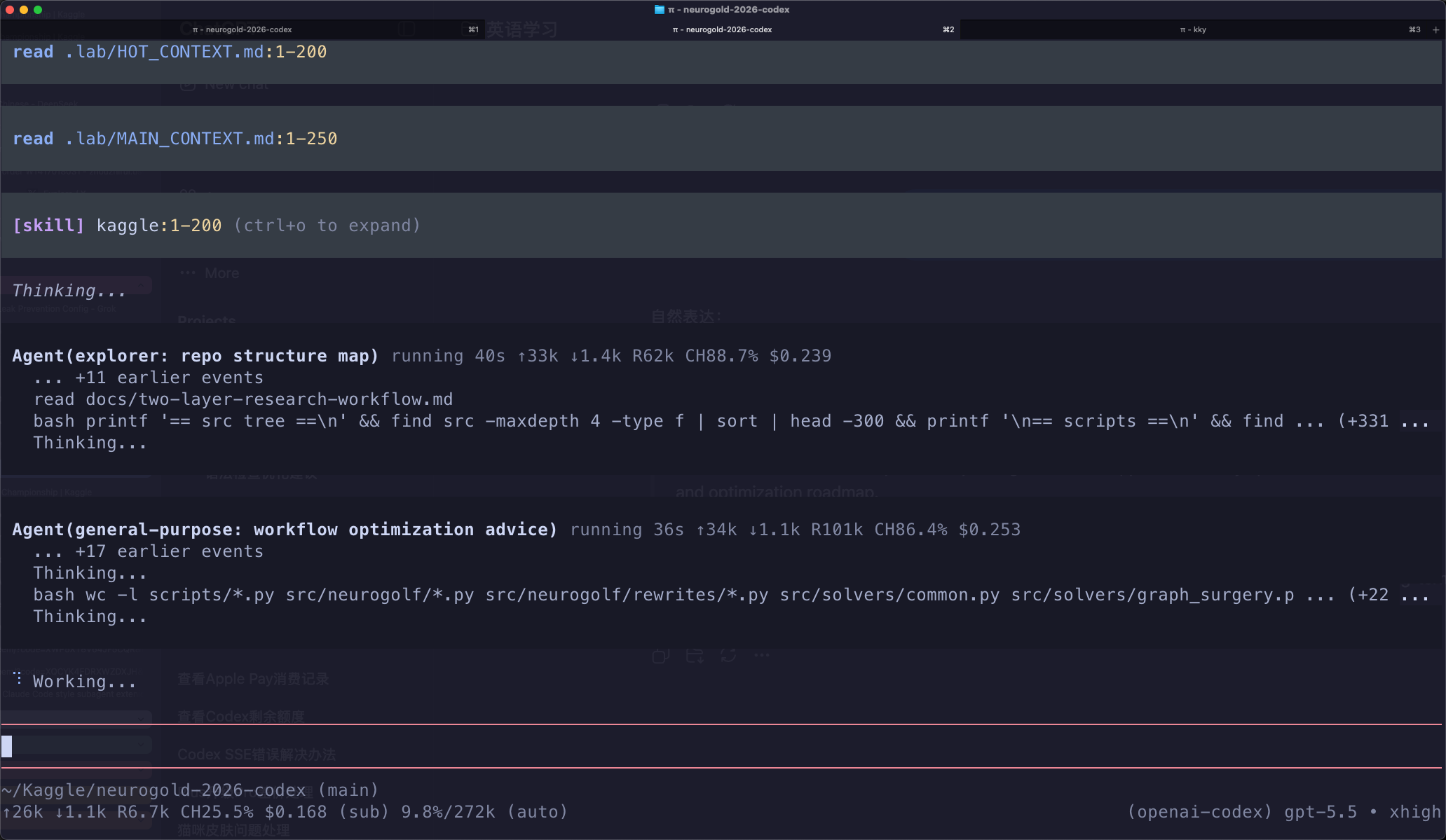
  "image": "https://raw.githubusercontent.com/kky42/pi-subagents/main/assets/subagents.png"
}
Security note
Pi packages can execute code and influence agent behavior. Review the source before installing third-party packages.
README
pi-subagents
Claude Code-style subagents for pi: delegate repo exploration, broad code search, and independent reviews to fresh child agents.
pi install npm:@kky42/pi-subagents
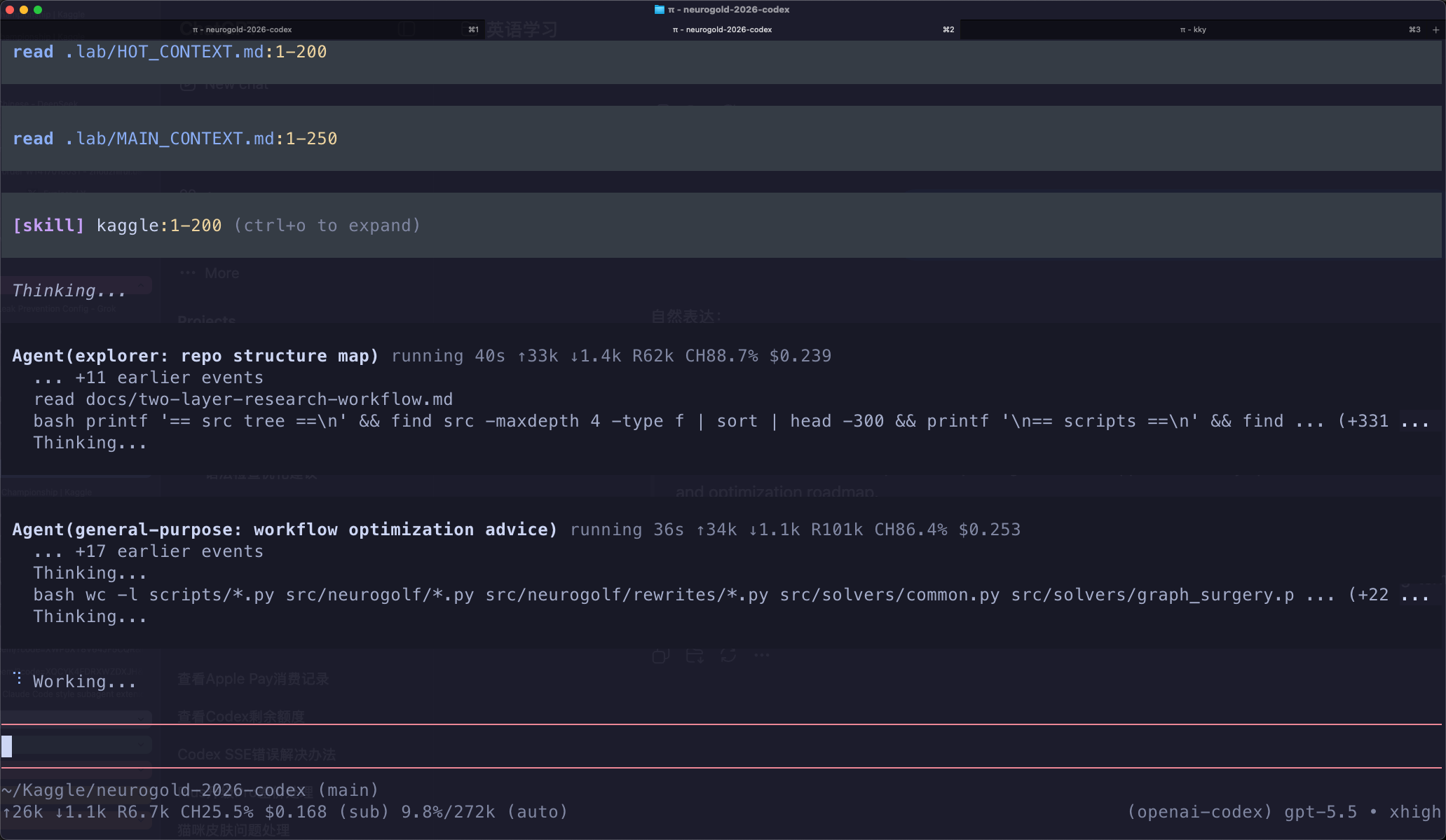
Pi Subagents vs. Claude Code Subagents
pi-subagents brings the same subagent shape to pi: an Agent tool with description, prompt, and optional subagent_type.
Available built-in agents:
general-purpose: general agent for complex questions, code search, and multi-step investigations.explorer: fast read-only search agent for repo maps, file discovery, references, and concise findings.
Built-ins use the same markdown profile style as custom agents and are bundled under src/subagents/. Custom agents can be added as ~/.pi/agent/subagents/<agent-name>.md. Fresh subagents start with their own conversation and the same working directory. The parent gets the final subagent report back as a tool result, then synthesizes the answer for the user.
Recent comparison run:
✅ means the main agent proactively invoked a root subagent for that scenario. ❌ means no root subagent invocation was observed before completion or the tool-call cap. Both harnesses used DeepSeek V4 Pro: pi ran deepseek/deepseek-v4-pro with --thinking high; Claude Code 2.1.170 was invoked with --model sonnet --effort high against DeepSeek's Anthropic-compatible endpoint, resolving to deepseek-v4-pro[1m].
| Scenario | Size | Claude Code 2.1.170 deepseek-v4-pro[1m] | pi deepseek/deepseek-v4-pro |
|---|---|---|---|
| Exploration | small, 3 files | ❌ | ✅ |
| Exploration | medium, 34 files | ❌ | ✅ |
| Exploration | large, 213 files | ❌ | ✅ |
| Exploration | huge, 703 files | ❌ | ✅ |
| Understanding / QA | small, 3 files | ❌ | ✅ |
| Understanding / QA | medium, 34 files | ❌ | ❌ |
| Understanding / QA | large, 213 files | ✅ | ✅ |
| Understanding / QA | huge, 703 files | ✅ | ❌ |
| Implementation | small, 3 files | ❌ | ✅ |
| Implementation | medium, 34 files | ❌ | ❌ |
| Implementation | large, 213 files | ❌ | ❌ |
| Implementation | huge, 703 files | ❌ | ✅ |
This table measures only the routing decision: whether the main agent chose to invoke a subagent. It does not score answer quality or task completion. Source report: /var/folders/xg/zjkd61716j76w0gl6s2vk85r0000gn/T/pi-subagent-main-agent-e2e-1781084243842/report.json.
Example
Ask pi:
explore this repo
The main agent can launch:
Agent({
  description: "Explore repo structure",
  subagent_type: "explorer",
  prompt: "Map the project purpose, key directories, important files, scripts, tests, and caveats. Do not edit files."
})
The explorer returns a concise repo map, and the main agent relays the useful parts.
Custom Subagents
Define subagents as markdown files. Built-in definitions live in src/subagents/general-purpose.md and src/subagents/explorer.md; custom definitions live in ~/.pi/agent/subagents/. The filename is the subagent name, so ~/.pi/agent/subagents/code-reviewer.md is selected with subagent_type: "code-reviewer".
---
description: Reviews code changes for correctness and maintainability.
tools: read, grep, find, ls, bash
model: inherit
thinking: high
---

You are a careful code reviewer. Focus on correctness, tests, regressions, and maintainability.
Fields:
descriptionis required and is shown in the available-agent roster.toolsis optional; omit it to keep the default child-session tools. When present, it must be a non-empty comma-separated string such astools: read, grep, find; that list becomes the child-session tool allowlist. Tool names can target built-ins (read,bash,edit,write,grep,find,ls) and any custom or extension tools loaded into that child session. Unknown tool names are passed to pi, which may ignore them;Agentis always stripped from child sessions.modelis optional; omit it or setinheritto use the caller's model; explicit values must use exactprovider/model-idsyntax.thinkingis optional; omit it or setinheritto use the caller's thinking level.- The markdown body is required and is appended to the child agent's system prompt.
Files are ignored when the filename is not a valid lowercase kebab-case agent name, the frontmatter is invalid, description is missing, the body is empty, model is malformed, tools is missing a non-empty comma-separated value after the field is present, or thinking is not one of off, minimal, low, medium, high, or xhigh. Profiles with syntactically valid but unavailable model values are not advertised in the active agent roster.
Notes
- Subagents cannot launch other subagents; the main agent coordinates follow-up delegation after each result returns.
- Root-level parallel delegation is supported and bounded by the extension.
- Subagents inherit the caller's current model and thinking level unless a custom profile overrides
modelorthinking. - Subagents do not inherit parent conversation messages or tool results, so prompts should be self-contained.
- The TUI footer shows cumulative child-agent usage under the
pi-subagentsstatus key, for examplepi-subagents ↑47k ↓3.5k R177k CH91.0% $0.429. exploreris prompted as read-only; its child session allowsbashfor read-only exploration and verification commands such asrgor test scripts, while pi permissions are still controlled by the active pi runtime.
E2E
Run the main-agent behavior e2e matrix:
npm run e2e
This downloads fresh GitHub fixtures across four size buckets (octocat/Spoon-Knife, chalk/chalk, expressjs/express, and vuejs/core by default), runs fresh pi -p sessions with ambient skills, extensions, prompt templates, themes, and context files disabled, then records Claude Code-style routing scenarios. The default pi settings are deepseek/deepseek-v4-flash with --thinking high. For observational scenarios, the runner stops an agent process as soon as a root subagent invocation is detected, because that is enough to record the main-agent delegation decision. It also stops after --max-tool-calls root tool calls, defaulting to 50, so direct runs stay bounded. For pi the subagent signal is the Agent tool; for Claude Code this can be Agent, Task, or an agent-named tool advertised in the stream init event, such as Explore.
- codebase exploration
- codebase understanding / QA
- small README implementation
- small, medium, large, and huge fixture buckets
To compare the same scenarios against Claude Code:
npm run e2e:compare-claude
The Claude comparison uses --model haiku --effort high by default and does not set a Claude budget cap unless --claude-max-budget-usd is provided. If DEEPSEEK_API_KEY is exported or present in .env, the runner configures Claude Code with DeepSeek's Anthropic-compatible endpoint and maps haiku to deepseek-v4-flash[1m]; it also creates a temporary pi auth file for the same key. It writes a report under /tmp, logs each scenario, and prints a ✅/❌ useSubagent summary table. By default the Claude run keeps Claude Code's dynamic system prompt sections enabled so subagent routing guidance matches normal Claude Code behavior; add -- --claude-exclude-dynamic-system-prompt-sections only when you intentionally want Claude's prompt-cache mode. Add -- --repeat 3 to repeat each task, -- --max-tool-calls 20 to lower the direct-run cap, -- --timeout-ms 120000 --claude-timeout-ms 120000 when you want explicit wall-clock limits, -- --strict-observed when incomplete observational scenarios should fail the command, or -- --strict-claude when Claude-side failures should fail the command.