@leo-alvarenga/pi-zen-frame
A pi-coding-agent extension that gives the TUI editor a simple yet polished look and feel
Package details
Install @leo-alvarenga/pi-zen-frame from npm and Pi will load the resources declared by the package manifest.
$ pi install npm:@leo-alvarenga/pi-zen-frame- Package
@leo-alvarenga/pi-zen-frame- Version
0.16.0- Published
- Aug 22, 2026
- Downloads
- 895/mo · 895/wk
- Author
- leo-alvarenga
- License
- MIT
- Types
- extension
- Size
- 125.6 KB
- Dependencies
- 0 dependencies · 2 peers
Pi manifest JSON
{
  "extensions": [
    "./extensions/index.ts"
  ]
}
Security note
Pi packages can execute code and influence agent behavior. Review the source before installing third-party packages.
README
@leo-alvarenga/pi-zen-frame
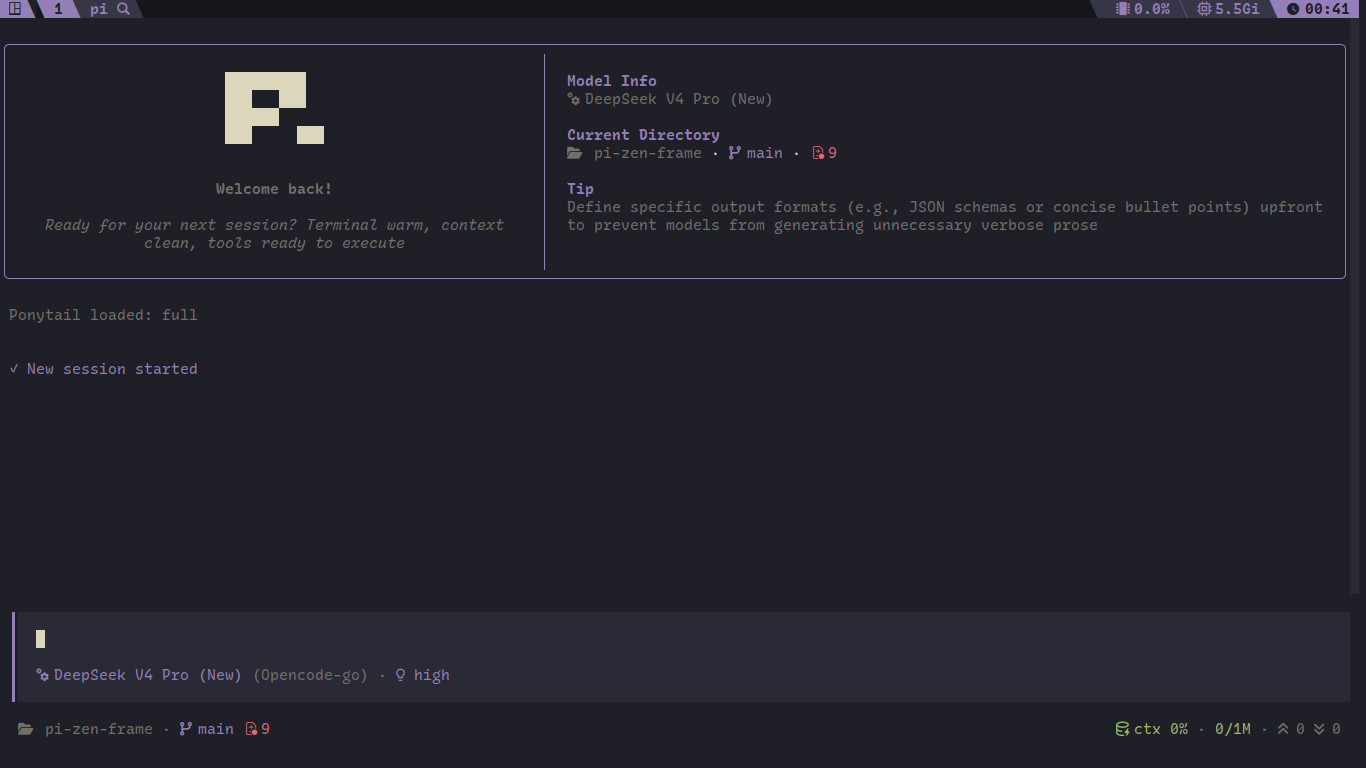
A pi-coding-agent extension that gives the TUI editor a clean, minimalist layout with customizable status indicators and frames.
Features
- Clean Frame: Clean editor frame with segments placed above and below it to easily see relevant info
- Header Box: Optional Claude-style welcome panel displaying a logo, model/provider info, current working directory, and Git status
- Working Messages: Randomized loading status messages during response generation, updated on a configurable timer
- Native Theme Support: Uses pi
ThemeColortokens to automatically align with your active theme
Installation
Run the following command:
pi install @leo-alvarenga/pi-zen-frame
Or add pi-zen-frame to your pi packages list in ~/.pi/agent/settings.json:
{
  "packages": ["npm:@leo-alvarenga/pi-zen-frame"],
}
Then, restart pi or run /reload in the console.
Configuration
Configuration is loaded from ~/.pi/agent/pi-zen-frame.json. All properties are optional.
{
  // Fallback accent color for frame border and active segments
  "accentColor": "accent",

  // Master mute: renders all segments in muted tones except agent-mode
  "zenMode": true,

  // Editor-frame renderer by registered name (built-in: "blocky")
  "editorFrame": "blocky",

  "header": {
    "enable": true,
    // Header renderer by registered name (built-in: "basic")
    "type": "basic",
  },

  "frame": {
    "enable": true,

    // Minimum terminal width required to render the border frame
    "minWidth": 20,

    // Toggle individual status segments
    "showCwd": true,
    "showModel": true,
    "showContext": true,
    "showThinking": true,
    "showSpinner": false,
    "showAgentMode": true,
  },

  // Randomized status messages shown while streaming responses
  "workingMessage": {
    "enable": true,
    "intervalMs": 3000,
    "messages": [
      "Exploring the seas",
      "Tinkering with strange objects",
      "Analyzing patterns",
    ],
  },
}
Structure & Status Segments
The editor window features status indicators embedded along the frame borders:
| Location | Segment | Description |
|---|---|---|
| Top Left | model | Active model name and provider |
| reasoning | Current reasoning effort level, tinted with pi thinking tokens | |
| spinner | Active phase indicator (thinking, outputting, toolcall, exec) |
|
| Top Right | ctx | Context usage percentage and token counts with color alerts |
| Bottom Left | agent mode | Active agent indicator pill from pi-agent-manager |
| Bottom Right | cwd | Shortened path, active Git branch, and uncommitted file counts |
Commands & Keybindings
- Toggle Command:
/zen_mode— Toggles Zen mode on and off. - Default Keybinding:
ctrl+shift+z
To rebind or disable the hotkey, update ~/.pi/agent/keybindings.json:
{
  "piZenFrame.zenMode": "ctrl+shift+z", // Set to [] to disable the shortcut
}
Run /reload after modifying your keybindings.
Directory Layout
extensions/
├── index.ts            # Extension entry point: config initialization and events
├── config/             # Types, defaults, and settings normalization
├── components/         # Header (BasicHeader), frame border, and status segment modules
├── editor/             # BlockyEditor editor-frame renderer
├── renderers/          # Renderer registry + swap-in API (blocky / basic)
└── utils/              # Helpers for Git status, paths, and agent modes