@mrclrchtr/supi-cache
SuPi Cache — prompt cache health monitoring and cross-session forensics
Package details
Install @mrclrchtr/supi-cache from npm and Pi will load the resources declared by the package manifest.
$ pi install npm:@mrclrchtr/supi-cache- Package
@mrclrchtr/supi-cache- Version
1.14.0- Published
- Jun 18, 2026
- Downloads
- 2,586/mo · 379/wk
- Author
- mrclrchtr
- License
- MIT
- Types
- extension
- Size
- 148 KB
- Dependencies
- 1 dependency · 4 peers
Pi manifest JSON
{
  "extensions": [
    "./src/extension.ts"
  ],
  "image": "https://raw.githubusercontent.com/mrclrchtr/supi/main/packages/supi-cache/assets/logo.png"
}
Security note
Pi packages can execute code and influence agent behavior. Review the source before installing third-party packages.
README
@mrclrchtr/supi-cache
Adds prompt-cache monitoring and cache-regression forensics to the pi coding agent.
Install
pi install npm:@mrclrchtr/supi-cache
This is a beta package. Install individually.
For local development:
pi install ./packages/supi-cache
What you get
After install, the package does two things:
Monitor the current session
- records per-turn cache usage from assistant messages
- updates a footer status for cache health
- warns when the cache hit rate drops enough to count as a regression
- tries to explain the drop as compaction, model change, prompt change, or unknown
Investigate past sessions
- scans session files for cache regressions across time
- groups findings into a few built-in query patterns
- keeps agent-facing results redacted to structural fingerprints instead of raw command text or file paths
Commands and tool
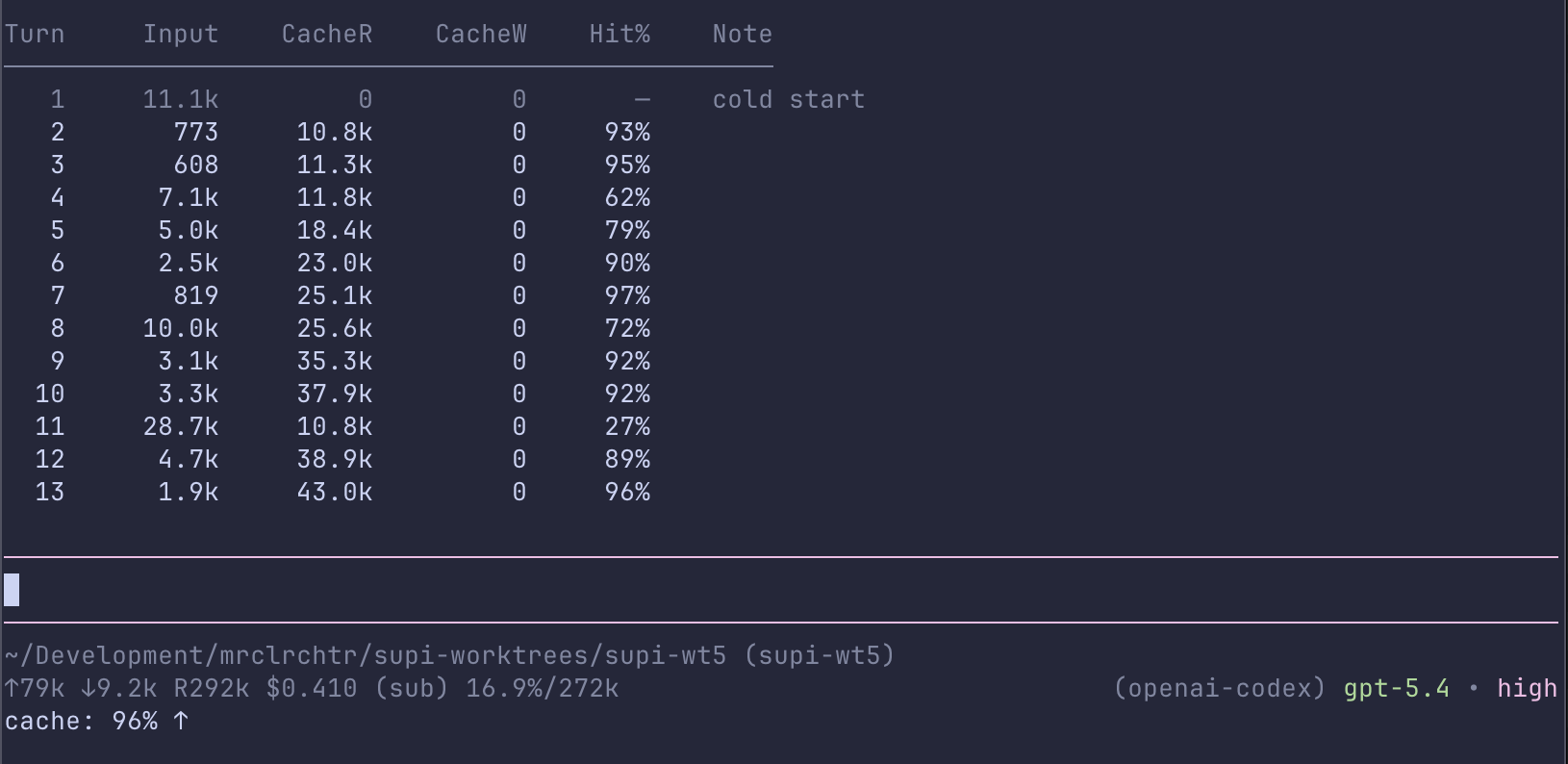
/supi-cache-history
Shows cache history for the current session.
The report includes per-turn values for:
- input tokens
- cache read tokens
- cache write tokens
- hit rate
- notes about detected regressions
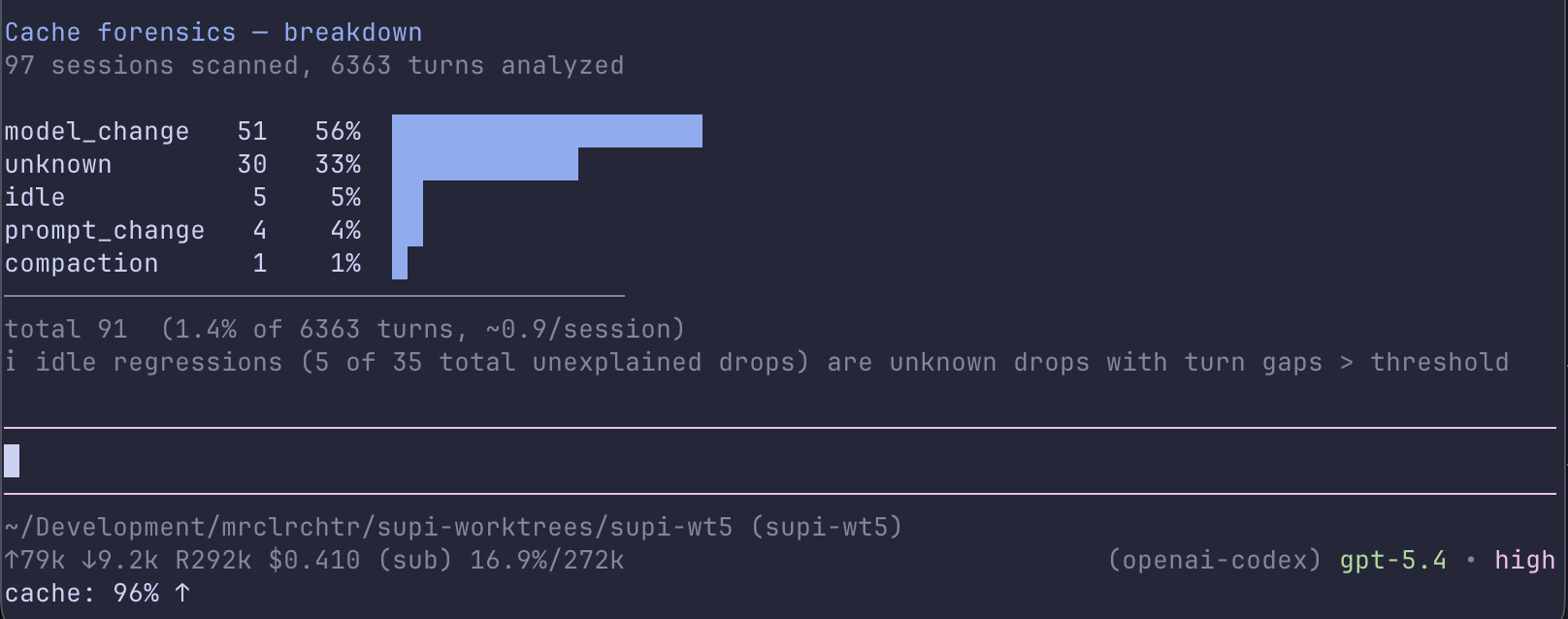
/supi-cache-forensics
Runs a cross-session investigation.
Supported patterns:
breakdown— count regressions by causehotspots— show the largest dropscorrelate— show which preceding tool calls correlate with dropsidle— show drops after long gaps between turns
Useful flags:
--since 7d--pattern breakdown--min-drop 20
supi_cache_forensics
Adds one model-callable tool with the same four patterns: hotspots, breakdown, correlate, and idle.
The tool returns JSON text. Before results are returned to the model, human-only details such as _pathsInvolved and _commandSummaries are stripped out.
Settings
This package registers a Cache section in /supi-settings.
Available settings:
enabled— turn monitoring on or offnotifications— show warning notifications for regressionsregressionThreshold— percentage-point drop that counts as a regression warningidleThresholdMinutes— inactivity gap used to classify idle-time regressions
Defaults:
{
  "supi-cache": {
    "enabled": true,
    "notifications": true,
    "regressionThreshold": 25,
    "idleThresholdMinutes": 5
  }
}
The config loader also reads the legacy cache-monitor section for upgrades, but supi-cache is the current config section.
Source
src/monitor/monitor.ts— live monitoring, commands, and tool registrationsrc/forensics/forensics.ts— cross-session scan pipelinesrc/report/history.ts— current-session history reportsrc/report/forensics.ts— cross-session forensics report