@vanillagreen/pi-web-tools
First-party Pi web tools: provider-toggled web search, Exa deep research, content retrieval, and OpenAI native web_search integration.
Package details
Install @vanillagreen/pi-web-tools from npm and Pi will load the resources declared by the package manifest.
$ pi install npm:@vanillagreen/pi-web-tools- Package
@vanillagreen/pi-web-tools- Version
3.0.0- Published
- Sep 6, 2026
- Downloads
- 849/mo · 221/wk
- Author
- vanillagreencom
- License
- MIT
- Types
- extension
- Size
- 363.3 KB
- Dependencies
- 1 dependency · 4 peers
Pi manifest JSON
{
  "extensions": [
    "./src/index.ts"
  ],
  "appendSystem": "./instructions.md",
  "image": "https://raw.githubusercontent.com/vanillagreencom/kendex/main/pi-extensions/pi-web-tools/assets/settings-panel.png"
}Security note
Pi packages can execute code and influence agent behavior. Review the source before installing third-party packages.
README
@vanillagreen/pi-web-tools
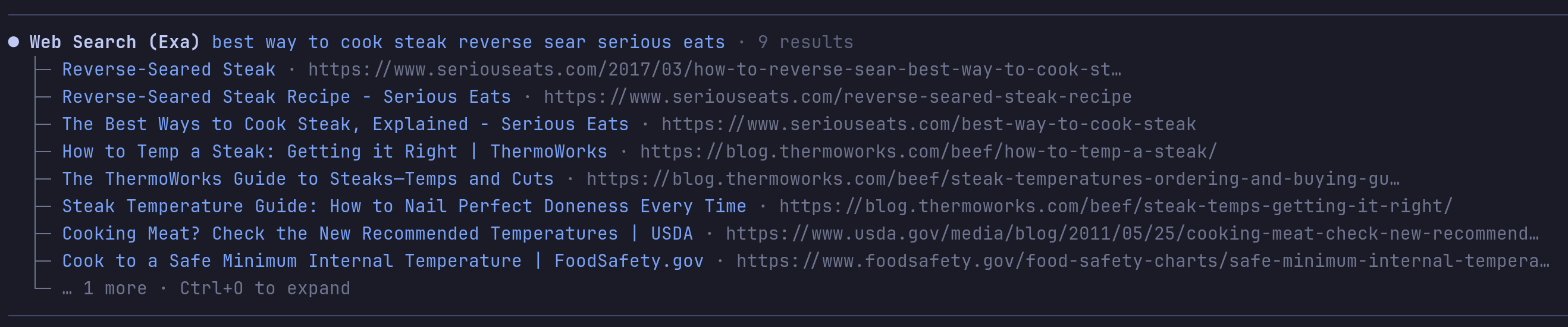
Web search, page retrieval and research tools for Pi. The agent can search providers, read documents and return to saved results.
Install
- npm:
pi install npm:@vanillagreen/pi-web-tools. - kendex: add the declaration below to the project's
kendex.toml, or to~/.config/kendex/kendex.tomlfor user scope. Runkendex update-pi.
[pi-extensions."@vanillagreen/pi-web-tools"]
source = "kendex"
Restart Pi after installation. Use kendex update-pi --check to preview the installation.
Features
- Search the web through a selected provider.
- Read pages, repositories, PDFs and supported videos.
- Read saved result text without another fetch.
- Produce research reports through Exa.
- Use optional Exa answer, similar-page and code search tools.
How it works
The extension enables tools for the configured providers and available credentials. The agent sends a search or fetch request. The chosen provider returns results, which the extension saves with the session. The tool returns a preview and a content identifier. The agent can use that identifier to read the saved text.
Settings
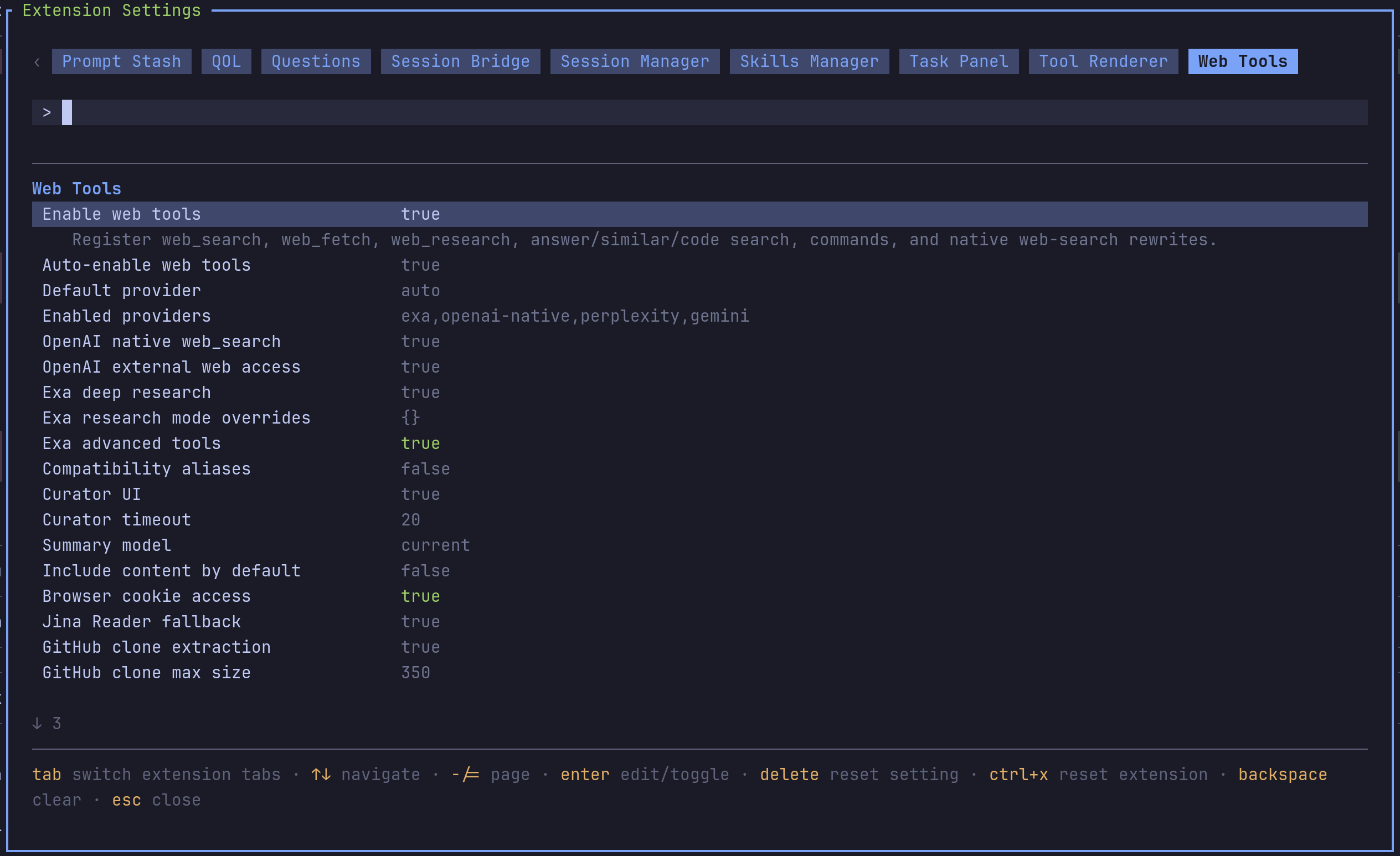
The settings editor writes project values to .pi/settings.json. The default user file is ~/.pi/agent/settings.json. PI_CODING_AGENT_DIR changes the user directory. Package values are stored under kendex.extensionManager.config["@vanillagreen/pi-web-tools"].
Open /extensions:settings; settings appear under the Web Tools tab. Project settings in .pi/settings.json apply only after Pi marks the workspace trusted.
enabled,autoEnable: the package and whether its tools join the active set on their own.defaultProvider,enabledProviders: which provider answersweb_searchand which are allowed at all.nativeOpenAiWebSearch,openAiExternalWebAccess: the native OpenAI rewrite.exaDeepResearchEnabled,exaResearchModes,exaAdvancedEnabled:web_research, its per-mode overrides, and the advanced Exa tools.htmlExtraction.jinaFallback,githubClone.enabled,githubClone.maxRepoSizeMB,video.enabled,browserCookieAccess: the fetch paths.compatibilityTools: register the older tool names such asfetch_contentandweb_search_exa.glyphStyle: Unicode or ASCII symbols;pi-tool-renderer's global override wins when set.
The Exa endpoints each tool calls and what each stores are in EXA.md. Maintainer notes are in DEVELOPMENT.md.
API keys
Set these as environment variables, in the project's .env or .env.local, or in a private JSON file named by PI_WEB_TOOLS_CONFIG_FILE. The process environment wins over files, and a project file is read only once Pi marks the workspace trusted.
EXA_API_KEYPERPLEXITY_API_KEYGEMINI_API_KEYOPENAI_API_KEYJINA_API_KEY, optional; Jina Reader works anonymously without it.
A value may be a 1Password reference such as op://Private/Exa API Key/credential when the op CLI is installed and signed in. A reference that does not resolve within the startup timeout is treated as unset so Pi starts anyway; PI_WEB_TOOLS_OP_READ_TIMEOUT_MS changes that timeout.