@zhcsyncer/pi-fast-mode
Same-model Fast / Priority scheduling for Pi on OpenAI and xAI.
Package details
Install @zhcsyncer/pi-fast-mode from npm and Pi will load the resources declared by the package manifest.
$ pi install npm:@zhcsyncer/pi-fast-mode- Package
@zhcsyncer/pi-fast-mode- Version
0.2.0- Published
- Sep 3, 2026
- Downloads
- 668/mo · 38/wk
- Author
- zhcsyncer
- License
- MIT
- Types
- extension
- Size
- 43.5 KB
- Dependencies
- 0 dependencies · 3 peers
Pi manifest JSON
{
  "extensions": [
    "./extensions/fast-mode.ts"
  ],
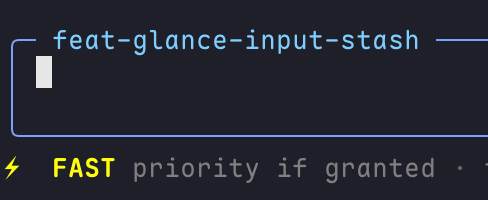
  "image": "https://raw.githubusercontent.com/zhcsyncer/pi-extensions/main/packages/pi-fast-mode/assets/demo-fast-mode-status.png"
}
Security note
Pi packages can execute code and influence agent behavior. Review the source before installing third-party packages.
README
pi-fast-mode
pi-fast-mode asks the same model for higher scheduling priority. It is not a faster model variant and it is not a thinking-level control.
Features
- Toggle Fast / Priority with
/fastorCtrl+F. - Keep each model's current switch in memory only. It is never written to the session jsonl.
- Set the next-process default for the current model with
/fast default on|off. That command also turns the current session switch to match. - Unconfigured models start off. There is no all-models default.
- Show a footer status on supported models. Hide it on unsupported models and leave the request unchanged.
Install
pi install npm:@zhcsyncer/pi-fast-mode
# or via the root bundle
pi install npm:@zhcsyncer/pi-extensions
# local
pi -e ./packages/pi-fast-mode
The root Git bundle also includes this extension:
pi install git:github.com/zhcsyncer/pi-extensions
Commands
/fast
/fast on
/fast off
Toggle or set the current in-memory switch. Ctrl+F is the same toggle, with a short repeat guard so a held key does not flip the switch repeatedly. Releasing the key does not toggle again.
/fast default on
/fast default off
Write this model's startup default and turn the current session switch to match. Unsupported models reject the command.
There is no /fast status command and no gpt-fast-mode compatibility alias.
Settings
Defaults are a list of provider/id in Pi settings.json. Only listed models start Fast:
{
  "fast-mode": {
    "models": ["openai/gpt-5.6"]
  }
}
/fast default is the supported way to change that list. Manual edits are read on /reload or process restart. An old fast-mode.enabled boolean or { "provider/id": true } map is rewritten on startup or /reload. A former global ON does not enable every model; Fast Mode posts a warning in the chat when that happens.
Footer
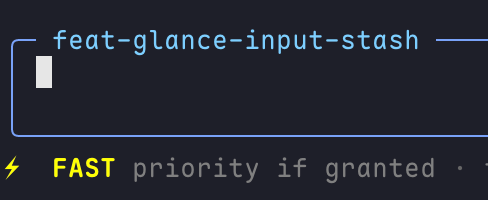
- Supported model, on:
⚡ FAST - Supported model, off: dim
fast - Unsupported model: hide the status and do not mutate the request
/fastandCtrl+Fupdate the footer only. They do not add a chat notification.
Supported providers
The provider list is fixed. There is no user allowlist.
- OpenAI and Codex request
prioritywhen Fast Mode is on. - Pi's built-in xAI models all use Responses and request
prioritywhen Fast Mode is on. - Custom xAI Completions models in
models.jsonremain supported.
Unsupported models hide the footer and leave the request unchanged.
Pricing and billing
Do not assume every model is granted priority.
- OpenAI Fast / priority is officially priced for the GPT-5.6 family. Older models may reject or ignore the request.
- On Responses models, Pi uses the returned
service_tierfor localusage.cost:priorityis typically about 2×, whiledefaultstays at 1×. - Custom xAI Completions models can request priority, but their local cost does not receive the Responses-specific adjustment.
Session lifetime
/fastandCtrl+Fchange the current model's in-memory switch only.- Switching models follows that model's switch. First use reads its startup default, or off if it has none.
/new,/resume, and/forkin the same Pi process keep each model's current switch./reloador a process restart rereads per-model defaults fromsettings.json./fast default on|offwrites the current model's settings default and turns this session's switch to match.