jevvy
Source-linked comment, function and test analysis for Pi using Jev
Package details
Install jevvy from npm and Pi will load the resources declared by the package manifest.
$ pi install npm:jevvy- Package
jevvy- Version
0.1.0- Published
- Sep 22, 2026
- Downloads
- 530/mo · 234/wk
- Author
- timbrinded
- License
- Apache-2.0
- Types
- extension
- Size
- 3.1 MB
- Dependencies
- 4 dependencies · 4 peers
Pi manifest JSON
{
  "extensions": [
    "./src/extension.ts"
  ]
}
Security note
Pi packages can execute code and influence agent behavior. Review the source before installing third-party packages.
README
jevvy
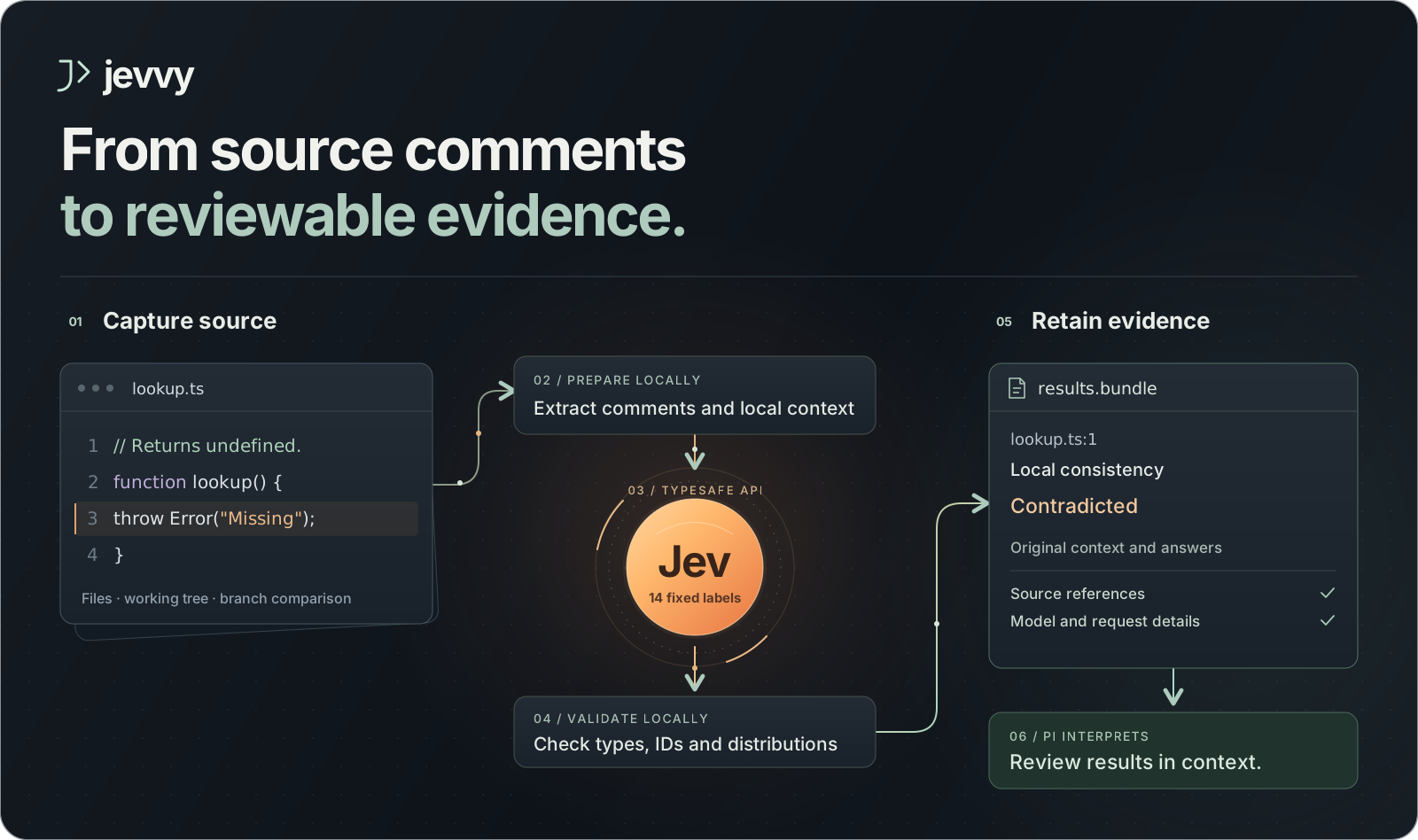
jevvy is a Pi extension that uses Jev to review comments, functions and tests. Each pack asks fixed questions and returns the answers with their source evidence. Pi can inspect that evidence before recommending changes. Jevvy scans leave source files unchanged.
Source parsing supports JavaScript/JSX, TypeScript/TSX, Rust, Python and Solidity. The Functions and Tests packs adapt Kiln Code Savers rubrics for unnecessary complexity and tests of application-owned behavior. They also include narrow checks developed through live Jev experiments.
Install
Requires Pi and Node 26 on macOS or glibc Linux, ARM64 or x64. See tested environments for platform coverage.
pi install npm:jevvy
cd /path/to/your/project
pi
Restart an existing Pi session after installation. Add -l to the install
command to install only for the current project.
To install from Git instead, use pi install git:github.com/timbrinded/jevvy.
In Pi, preview the comments affected by your working changes:
/jevvy comments --working --dry-runA dry-run shows the selected comments and planned requests without API calls or
an API key. For live analysis, set TYPESAFE_API_KEY in your shell before
starting Pi, then omit --dry-run. Requests use your TypeSafe account.
Scan comments
| Scope | Command |
|---|---|
| Named files | /jevvy comments --files src/example.ts src/other.ts |
| Working changes | /jevvy comments --working |
| Branch changes | /jevvy comments --base origin/master --head HEAD |
File paths are relative to Pi's working directory. Working scans compare against
HEAD and include non-ignored untracked files. Branch scans compare the base/head
merge-base with head; replace origin/master with your base branch.
Diff scans include unchanged comments attached to changed code. A clean working
tree has no changes to review; use --files to scan existing files. Add
--dry-run to any scan to preview it, or use /jevvy cancel to stop a running scan.
Scan functions and tests
/jevvy functions --files src/orders.ts
/jevvy tests --files test/orders.test.ts --context-files src/orders.ts package.json
Both packs also support --working, --base <ref> [--head <ref>], and --dry-run.
Supporting files are explicit: include the relevant implementation, manifest and
contract so a test can be assessed against the behavior it protects. They are
captured from the selected snapshot and subject to the context budget. Missing
evidence remains visible; Jevvy does not infer a complete call graph or test suite.
See pack rubrics and limits.
Read results
Each scan saves a bundle containing the assessments and the source used to make them. The result card shows coverage, errors and the bundle ID. Completed answers remain available after cancellation or failures in other requests.
Open the inspector to browse selected units, saved source and question definitions:
/jevvy inspect <bundle-id>Left and right change pages, up and down scroll, and Tab switches views. Escape or your configured Pi cancel key closes the inspector.
Retrieve an overview or a page of comments:
/jevvy results <bundle-id>
/jevvy results <bundle-id> --view units --limit 5
Pi can also use jevvy_comments, jevvy_functions, jevvy_tests, and
jevvy_results. Reading saved results makes no API calls. See the
sample report for the output format; its
values are synthetic.
For a code-pack result, select a question and rank its issue outcome:
/jevvy results <bundle-id> --view units --labels owned_behavior --sort owned_behavior --outcome issue --min-probability 0.8 --min-confidence 0.7 --include-context --include-definitionsThose cutoffs are example review settings, not calibrated accuracy guarantees. Filters operate on saved answers. The full distributions, unknown outcomes and unfiltered results remain available. A scan that raises no candidate does not establish that the code or tests are correct.
Data and settings
Live scans send selected units and their bound context to TypeSafe. Context can include an entire small file. Reports and retrieved code enter Pi's model conversation. Bundles store full captured files locally so results retain the source as it was when scanned.
Bundles and cached answers are stored in ~/.cache/jevvy. Set JEVVY_STORAGE_DIR
to change this location; keep it outside tracked project files. Saving a new
bundle removes results and cached answers older than 30 days by default.
For other settings, set JEVVY_CONFIG to a JSON object that overrides the
configuration defaults.
Development
Use the Node version in .node-version and the pnpm version in package.json. TypeScript 7 checks types and builds the library; Node runs the tests directly.
git clone https://github.com/timbrinded/jevvy.git
cd jevvy
pnpm install --frozen-lockfile
pnpm run check
pnpm run smoke
pnpm exec pi install .
check runs formatting, lint, typecheck, tests and build. smoke checks Pi
integration. Neither makes paid API calls. Use pnpm run smoke:live with
TYPESAFE_API_KEY for a live check.
The last command registers the checkout as a local Pi package. Restart Pi after source edits.
- Release guide: Pi discovery, npm packaging and publication.
- Functions and Tests: rubrics, evidence requirements and Kiln attribution.
- Verification: test coverage and detailed checks.
- Bundle contract: schemas, validation and retrieval rules.
License
Apache-2.0. Separate third-party notices apply to the Solidity grammar and adapted Codesavers material.