pi-true-queue
Task queue for pi — queued tasks stay hidden from the agent until the current one is done
Package details
Install pi-true-queue from npm and Pi will load the resources declared by the package manifest.
$ pi install npm:pi-true-queue- Package
pi-true-queue- Version
1.1.0- Published
- Jul 10, 2026
- Downloads
- not available
- Author
- krystofee
- License
- MIT
- Types
- extension, skill
- Size
- 817 KB
- Dependencies
- 0 dependencies · 3 peers
Pi manifest JSON
{
  "extensions": [
    "./index.ts"
  ],
  "skills": [
    "./skills"
  ],
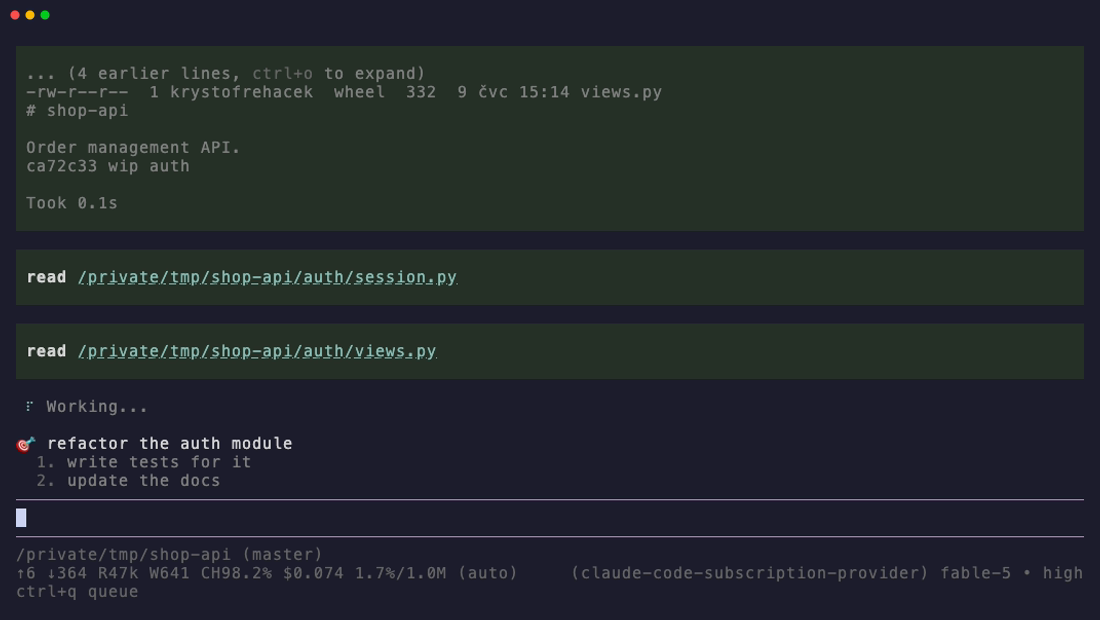
  "image": "https://raw.githubusercontent.com/Krystofee/true-queue/master/queue-widget.png"
}
Security note
Pi packages can execute code and influence agent behavior. Review the source before installing third-party packages.
README
true-queue
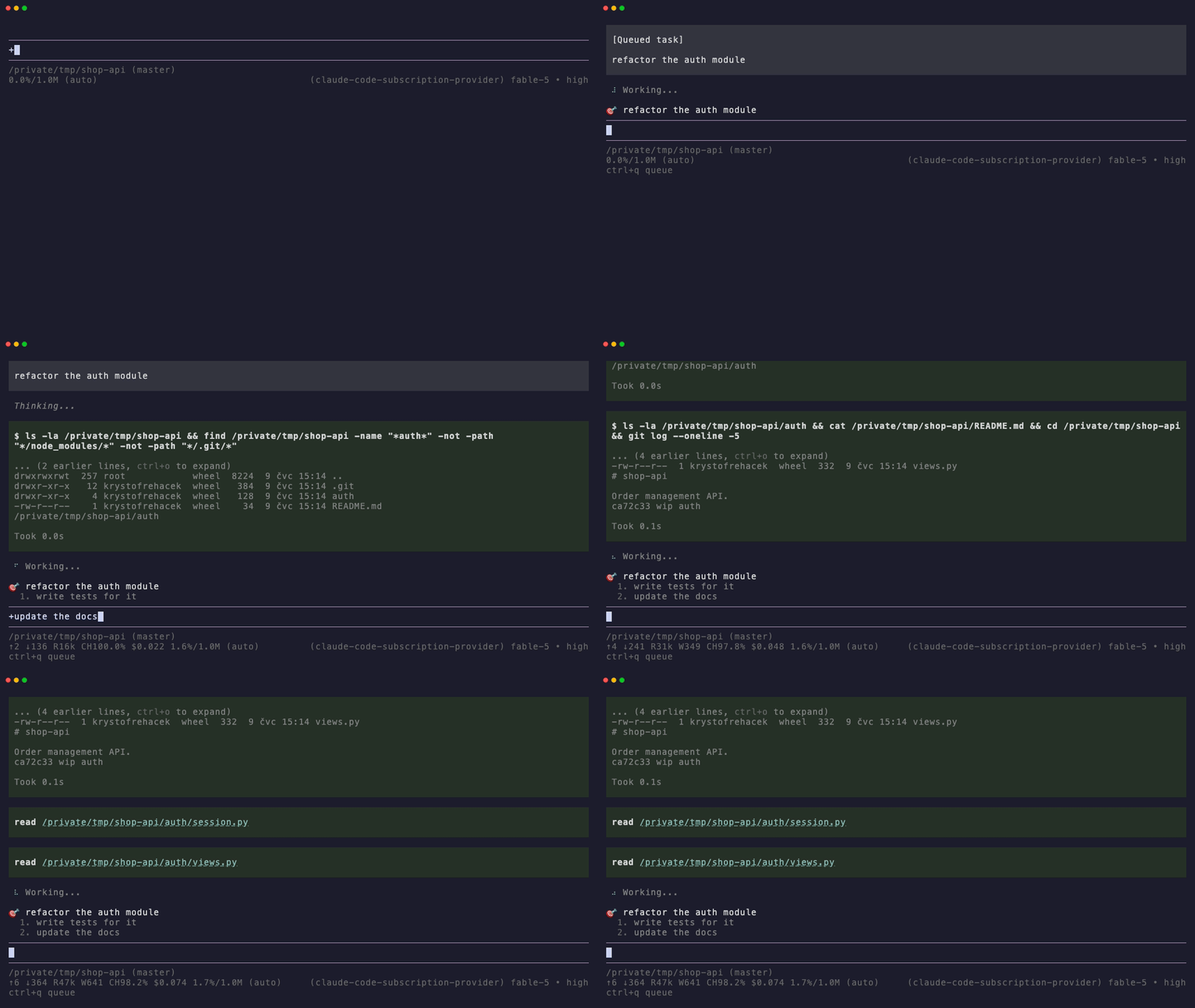
A task queue for pi. Queued tasks stay hidden from the agent until the current one is done, so it works on one thing at a time instead of rushing toward the last item on your list.
Install
pi install npm:pi-true-queue
Or try it without installing:
pi -e npm:pi-true-queue
Usage
Prefix a message with + to queue it. Works anytime — while the agent is running or when it's idle:
+refactor the auth module
+write tests for it
+update the docs
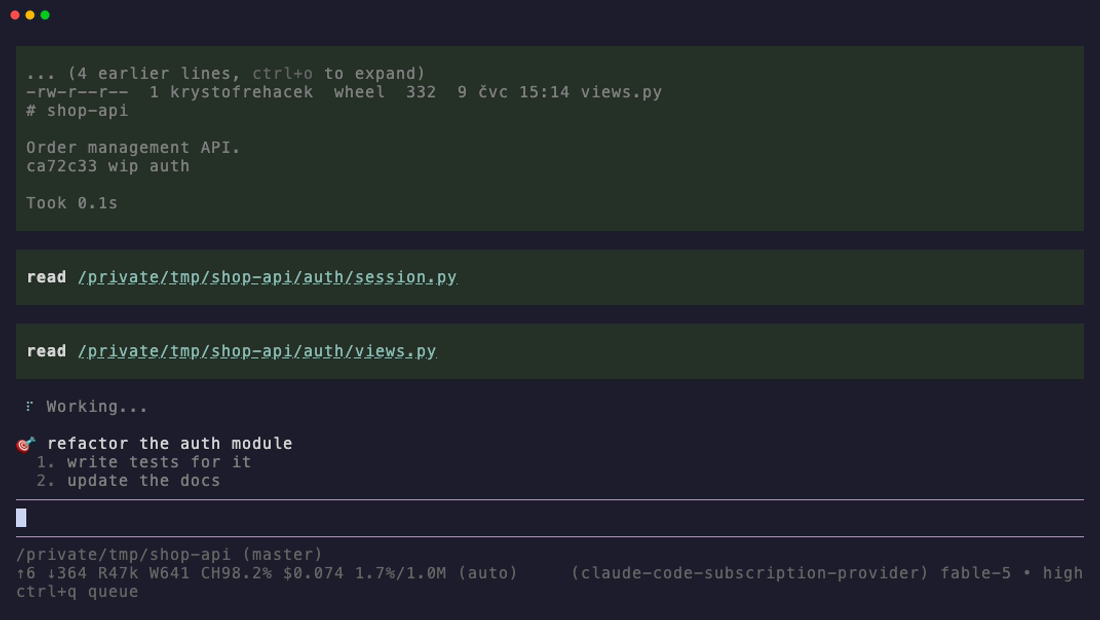
Each task is sent as a fresh prompt after the previous one finishes. The agent never sees what's next:
Messages without + are normal pi input — they steer the current task:
+migrate the User model to the new schema      ← queued, hidden from the agent
also handle the legacy null emails             ← steer, agent sees it immediately
Directives
Queue items starting with a known slash command are directives — executed by the extension between tasks instead of being sent to the LLM. Change model mid-queue, compact context, adjust thinking level:
+implement the parser
+/model gpt-5
+write property tests for it
+/compact
+/thinking high
+refactor based on test findings
Supported: /model <name>, /compact [instructions], /thinking <level>. Directives run back-to-back when reached, so /model + /compact before a task applies both. If a /model directive fails (no match, no API key), the queue pauses so remaining tasks don't run with the wrong model. Other slash commands can't be dispatched by extensions, so anything else starting with / is queued as a normal task.
You can also ask the agent to queue something — it has an enqueue_task tool:
you:   when you're done here, queue a cleanup of the old fixtures
agent: Queued at position 1: clean up the old fixtures
Queue editor
Press ctrl+q (or type /queue) to open the editor, even while the agent is running:
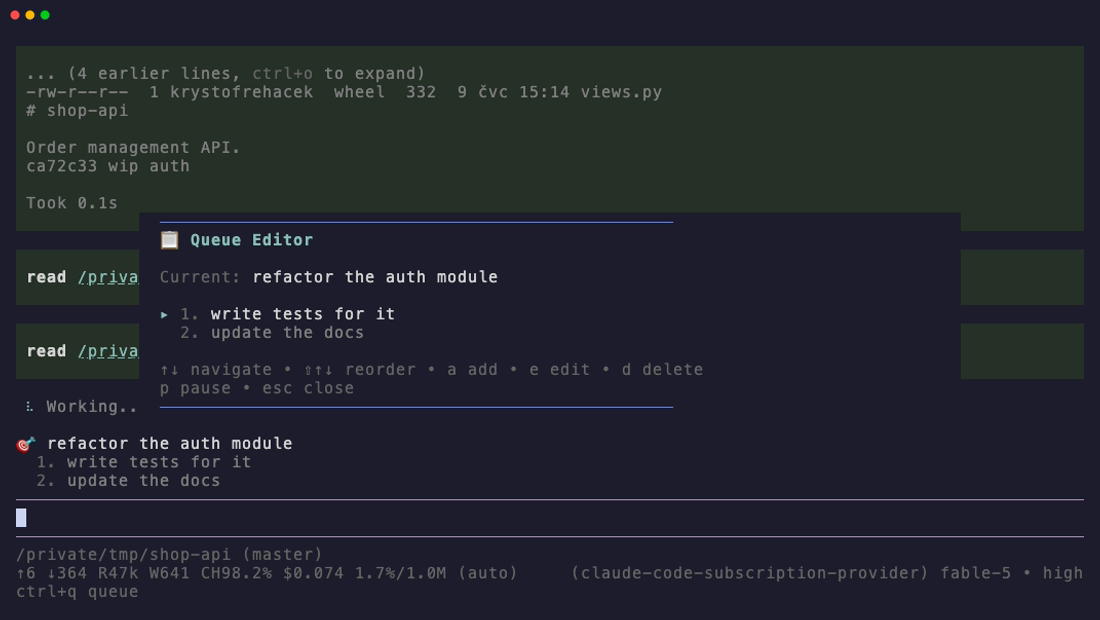
↑↓navigate,⇧↑↓reorderaadd,eedit,ddeleteppause/resume,escclose
Commands
/queue              open editor
/queue add <task>   add a task
/queue clear        clear all
/queue done         mark current done, start next
/queue skip         drop current task
/queue pause        pause auto-dequeue
/queue resume       resume
Why hide the queue?
An LLM that sees five tasks rushes through the first four to get to the last one (goal anchoring, completion bias). Loops and verifiers (/goal, /loop, Ralph) catch premature completion after the fact; a queue prevents it — the agent can't rush toward a goal it can't see. That makes it a simple way to run long, multi-step work without the model converging early, including work where "done" is your judgment rather than a test suite.
The package ships with a sequential-isolation skill that teaches the agent to treat each task as the only one.